

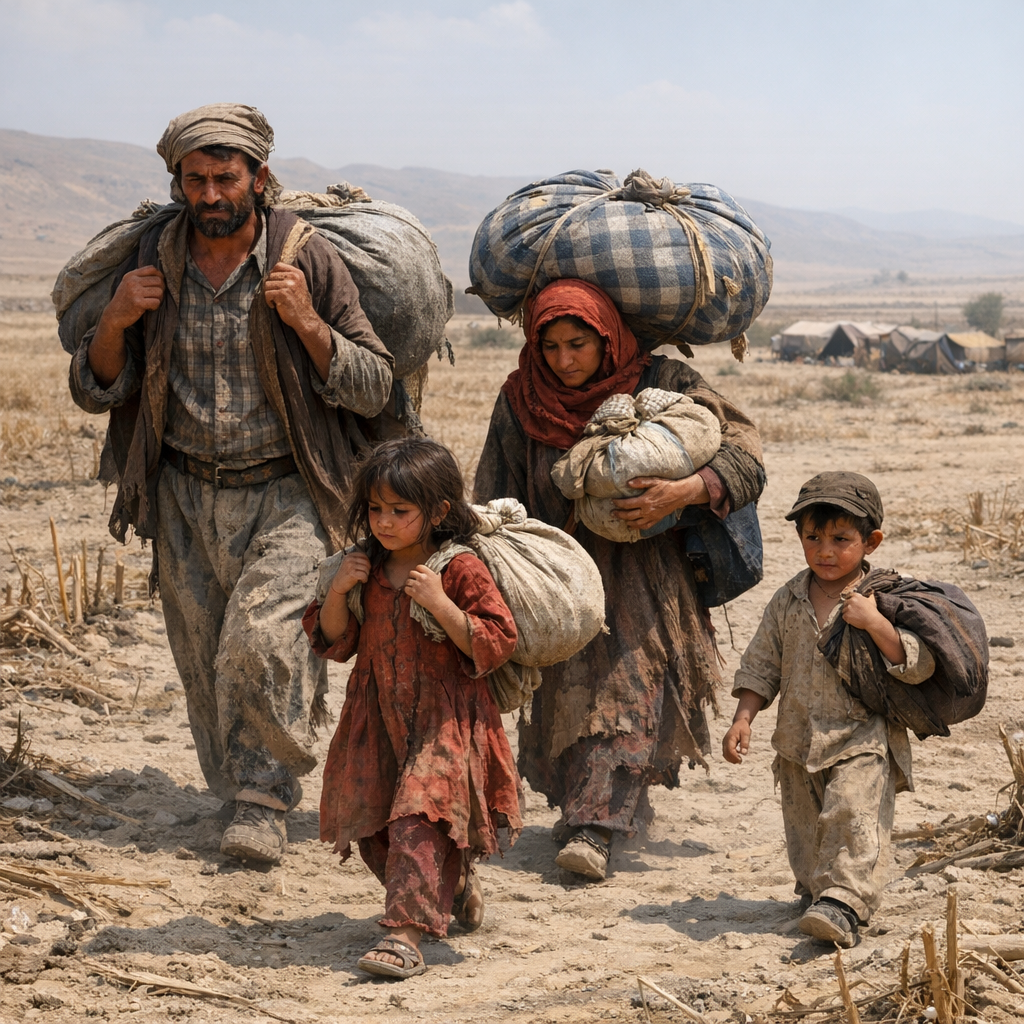
By Emily Johnson — From across the globe, two of the most urgent issues threatening human wellbeing are worsening food insecurity and large-scale migration. These challenges are interconnected—shaped by conflict, climate changes, economic pressures—and demand attention from policymakers, aid groups, and everyday citizens alike.
Food Insecurity: Signs of Strain
Globally, hunger has eased in recent years, but the progress is fragile and uneven. About 7.8 percent of the world’s population faced hunger in 2025, while 2.1 billion people—nearly a third of the human family—experienced moderate or severe food insecurity.
Conflict remains the largest driver of acute food crises. Wars in the Middle East, instability in parts of Africa, and other fragile regions have disrupted food systems, displaced millions, and prevented critical humanitarian access to communities in dire need.
Meanwhile, climate shocks—droughts, heat waves, and erratic rainfall—are harming crop yields and reducing the reliability of local food supplies. Rising costs for transporting food, fertilizers, and fuel have made healthy diets unaffordable for many, especially in rural communities.
Migration: A Complex and Growing Phenomenon
By mid-2024, around 304 million people were international migrants—those living outside their country of birth. Many migrate for work, education, or to join family; others are forced from home by conflict, persecution, or disaster.
Forced displacement remains high: more than 117 million people are forcibly displaced, including refugees, asylum seekers, and internally displaced persons. These numbers continue to rise, driven by conflict but also by environmental degradation such as drought, flooding, or resource scarcity.
Intersection of Food, Climate, Conflict, and Migration
Food insecurity and migration feed into each other. When people cannot reliably access sufficient, nutritious food—especially when combined with violence, lost livelihoods, or climate extremes—they may be compelled to migrate. Those on the move, especially children and displaced families, often face hazardous conditions and health risks.
The global threat is compounded by spillover effects—from disrupted trade or energy supply chains, reduced agricultural output, and strained aid systems. Without stable food systems and peace, both hunger and displacement may become more frequent and severe.
What Can Be Done
Tackling these twin crises requires coordinated, long-term action. On food security, that means strengthening resilience in vulnerable regions—through sustainable farming practices, better storage and transportation, investment in infrastructure, and social protection programs.
Addressing migration challenges means improving humanitarian response and protections for displaced people, but also addressing the root causes that push people from their homes—conflict resolution, climate adaptation, equitable economic opportunity.
International cooperation—across trade, environmental policy, development finance—is essential. Efforts to lower barriers to accessing aid, stabilize food market prices, and actively mitigate climate change could reduce both hunger and migration pressures. For communities locally, staying informed and supporting credible relief and development organizations makes a difference.
Let’s remember: these are global problems, but they have local echoes—affecting prices in grocery stores, influencing migration flows, and reminding us how interconnected our world is. By understanding and acting, we play a part in shaping a more stable, secure future.