

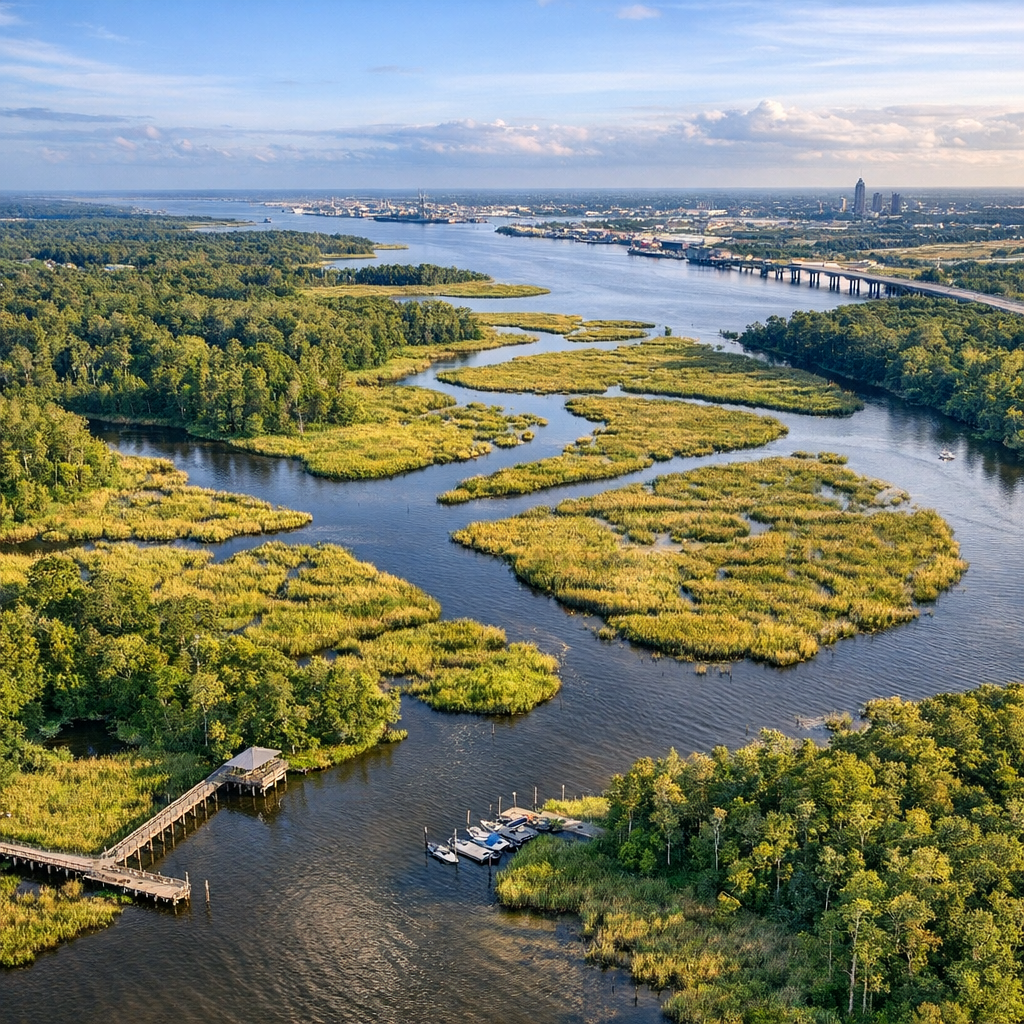
Mobile, Alabama, is taking significant steps to bolster its environmental resilience through a series of conservation and restoration initiatives. These efforts aim to protect natural habitats, improve water quality, and mitigate the impacts of climate change.
Conservation Easement Along Rabbit Creek
In January 2026, the City of Mobile secured a conservation easement on nearly 150 acres along Rabbit Creek. This move preserves valuable wetlands and provides flood mitigation by maintaining a natural buffer between the waterway and developed areas. The easement ensures the land remains undeveloped, safeguarding habitats for numerous wildlife species, including endangered and threatened birds, reptiles, amphibians, invertebrates, and plants.
Salt Aire Shoreline Restoration Project
Active construction began in April 2026 on the Salt Aire Shoreline Restoration Project, aiming to restore approximately 30 acres of intertidal marsh habitat on the western shore of Mobile Bay. The project involves installing shoreline protection structures and planting native marsh vegetation to rehabilitate and stabilize the marsh ecosystem, providing habitat for fish and wildlife while protecting inland areas during coastal storms.
The Eagle Reef Project
The Eagle Reef Project, initiated as an Eagle Scout service project, has expanded into a regional environmental effort. The project deploys mini reefs beneath docks and piers across Mobile and Baldwin counties to restore and revitalize marine and coastal ecosystems. These reefs support filter feeders like oysters and barnacles, which help improve water quality and provide habitat for various fish species.
Community Engagement and Environmental Stewardship
Local organizations and businesses are actively participating in environmental stewardship. For instance, Soterra, LLC, in partnership with Greif, Inc., donated and delivered 200 new 55-gallon plastic drums to be repurposed as rain barrels in the Mobile area. This initiative aims to reduce stormwater runoff, thereby decreasing water pollution and promoting water conservation.
Additionally, the Barry Environmental Stewardship Team (B.E.S.T.) at Plant Barry engages employees in environmental awareness and conservation efforts. Their activities include recycling programs, habitat restoration projects, and community clean-up events, demonstrating a commitment to environmental responsibility.
Climate Resilience and Sustainability
Mobile’s geographic location makes it susceptible to climate-related risks such as hurricanes, flooding, and heatwaves. The city has experienced a temperature increase of approximately 1.5°F since 1970, with projections indicating more frequent and intense heatwaves and precipitation events. To address these challenges, Mobile is investing in climate resilience and sustainability efforts, including infrastructure improvements and community education programs.
Through these comprehensive initiatives, Mobile is enhancing its environmental resilience, protecting natural habitats, and fostering a sustainable future for its residents.