

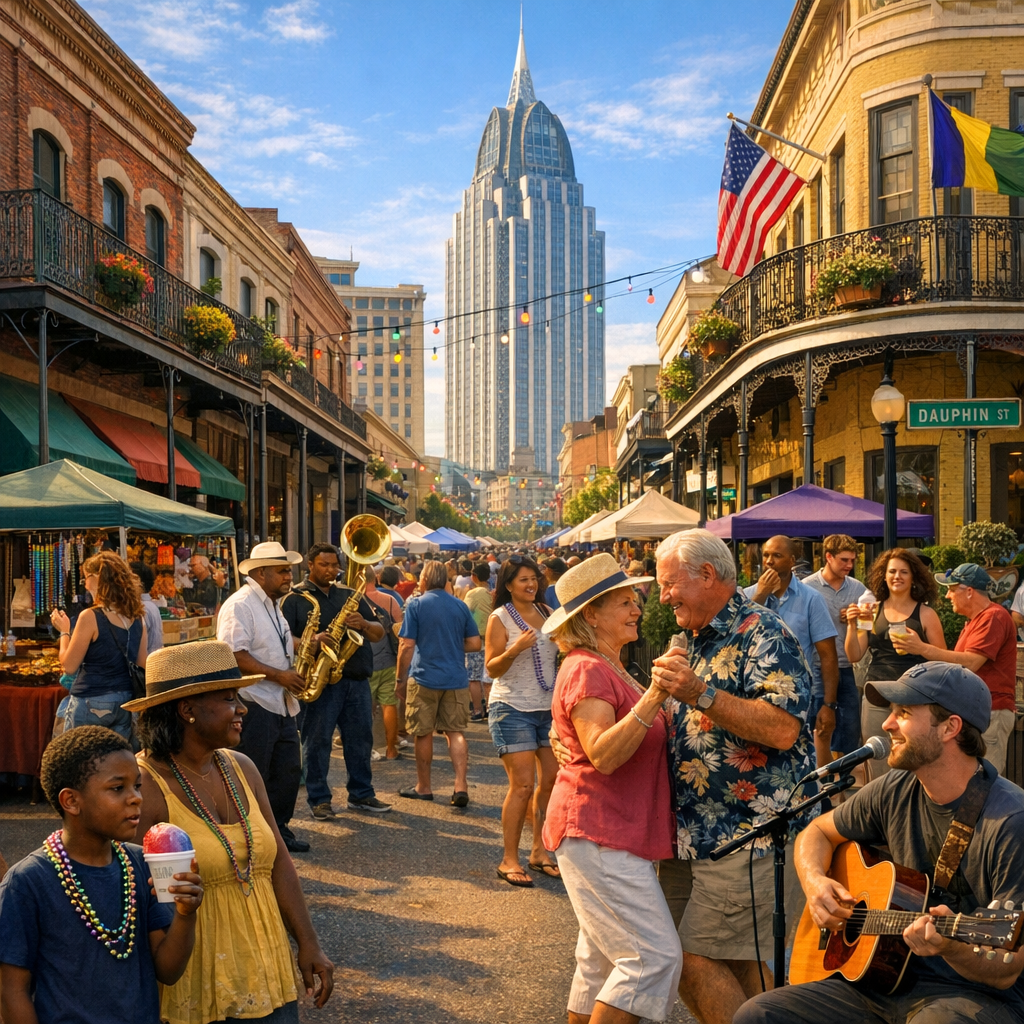
Mobile, Alabama, stands as a testament to a rich and varied history that has shaped its unique cultural landscape. Established in 1702 as the first capital of French Louisiana, Mobile has been influenced by French, British, Spanish, and American cultures over the centuries. This blend of heritages is evident in our architecture, traditions, and community events.
Colonial Foundations
Our city’s journey began with French colonists who founded Mobile as the capital of French Louisiana. The original settlement, known as Fort Louis de la Louisiane, was established to secure France’s claim to the territory. Over time, Mobile transitioned under British and Spanish control before becoming part of the United States in 1813. Each era left its mark, contributing to the diverse cultural fabric we cherish today.
African American Heritage
Integral to Mobile’s history is the African American community, whose contributions have been profound. Notably, Africatown, founded by survivors of the Clotilda—the last known slave ship to arrive in the U.S.—stands as a symbol of resilience and cultural preservation. The recent discovery of the Clotilda’s remains has brought renewed attention to this significant chapter in our history.
Celebrating Our Heritage
Mobile’s rich past is celebrated through various events and landmarks. The annual Mardi Gras festivities, rooted in our French heritage, showcase vibrant parades and traditions that have been passed down through generations. Historic sites like the Colonial Fort Condé and the Museum of Mobile offer residents and visitors alike a glimpse into our storied past.
Preserving Our Legacy
As we continue to grow and evolve, it’s essential to honor and preserve the diverse histories that define Mobile. By engaging with our past, we can foster a deeper understanding and appreciation for the community we are today. Let’s embrace our rich tapestry and ensure that the stories of all who have shaped Mobile are remembered and celebrated.